Investment
Bacalar or Tulum? An Honest Comparison for Investing or Living
Bacalar or Tulum? An honest comparison for investing or living: market maturity, lagoon vs beach, connectivity, and which profile fits each destination.
Two Destinations, Two Moments in the Same Caribbean
Anyone weighing a purchase in southern Quintana Roo sooner or later asks the same question: Bacalar or Tulum? It's a natural comparison — the two destinations share a state, a culture, and extraordinary natural beauty — but framing it as a rivalry is the wrong way to answer it. The real difference isn't which one is better, but where each stands in its own story. Tulum is now a global brand: the name needs no explanation in New York, Berlin, or Mexico City, a fame built over two decades of intense growth. Bacalar, by contrast, is only beginning to write that chapter. It's a Pueblo Mágico that still feels like a small town, with a freshwater lagoon roughly 42 kilometers long as its undisputed protagonist.
That difference in stage changes everything for anyone investing or looking for a place to live. Entering Tulum means entering a mature market: broad, liquid, professionalized, but also dense and fiercely competitive, where the supply of condos and hotels runs into the thousands of units. Entering Bacalar means arriving early: less product, less noise, fewer benchmarks — which demands sharper judgment, but also means getting in before the destination consolidates. Neither position is objectively superior; they are different bets, with different horizons and different temperaments. This article aims to compare the two honestly, without dismissing Tulum — which earned its place the hard way — and without selling Bacalar as a paradise free of nuance.
Nature: Freshwater vs. the Caribbean Sea
Tulum's natural asset is its stretch of beach: white sand, turquoise sea, cenotes tucked into the jungle, and an oceanfront archaeological site that ranks among the most photographed in Mexico. It's an extraordinary landscape, and it would be absurd to deny it. The caveat lies in the calendar: like much of the Mexican Caribbean, Tulum's coast goes through sargassum seasons — the seaweed that arrives in waves and, in certain months, forces hotels and municipalities into constant cleanup work. It doesn't ruin the destination, but it introduces a seasonal variable that any investor in beachfront product needs on their radar, because the guest experience — and therefore occupancy — is not the same year-round.
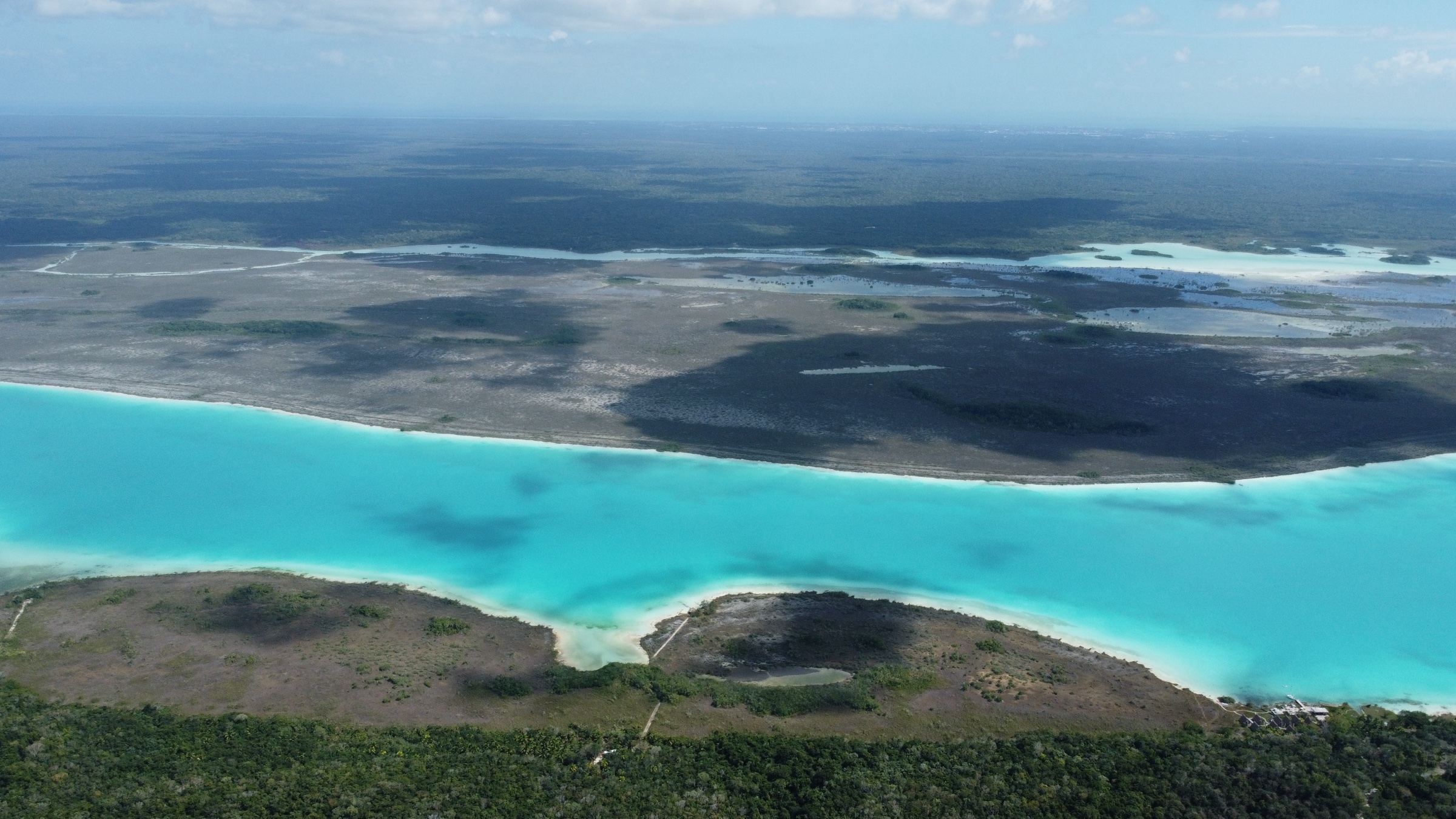
Bacalar's natural asset is of another nature, quite literally: a freshwater lagoon around 42 kilometers long, known as the Lagoon of Seven Colors for the range of blues produced by its limestone bed. Because it isn't the sea, it gets no sargassum: the water stays calm and navigable all year, with no swell — ideal for sailing, kayaking, or paddleboarding at any hour. Its shores are also home to stromatolites, structures built by microorganisms over thousands of years that rank among the oldest life forms on the planet. That fragility is also a commitment: the lagoon demands far more careful development than a conventional coastline, and that demand, properly understood, is precisely what protects the place's value over the long term.
Pace of Life and Visitor Profile
Tulum built its identity on a very particular energy: beach clubs, signature dining, nightlife, festivals, and an international wellness scene that draws a young, cosmopolitan visitor willing to spend. It's a high-intensity destination, made for being out, seeing and being seen. For vacation-rental investors, that profile has clear advantages: a steady flow of travelers, short stays, and high turnover. For someone looking to live there, though, that same energy can cut both ways: today's Tulum is vibrant but dense, with growing traffic and a daily life that unfolds amid constant motion. Some people love exactly that; others enjoy it for a week and wouldn't want to inhabit it year-round.
Bacalar attracts a different traveler: families, couples, and nature-minded visitors who come for the lagoon, the cenotes, and the quiet — not the party. The town keeps its plaza, its historic fort, and a rhythm that still feels closer to Mexico's deep southeast than to the Riviera Maya. Stays tend to be more contemplative: sunrise on the water, paddling among stromatolites, dinner on the early side. For living, that pace is a luxury growing ever scarcer in the Caribbean; for investing, it defines a guest who seeks quality and privacy over volume. The southern end of the lagoon, toward Xul-Há, takes that logic to its extreme: about 15 minutes from town, it is the quietest stretch with the deepest waters, where the lagoon can be enjoyed practically in private.
Connectivity: Airports, the Tren Maya, and the Highway
For years, Tulum's great advantage was being closer to Cancún; today that advantage has become autonomy, because Tulum's international airport is now operating and connects the destination directly with the United States, Canada, and Mexico's major cities. Add to that its Tren Maya station. It is first-rate connectivity, and it should be said plainly: in international air access, Tulum is ahead. The flip side is that this ease of access feeds density: more flights mean more visitors, more development, and more pressure on a territory that was already growing fast.
Bacalar's connectivity is more understated, but far better than people tend to assume. The Tren Maya now operates a station in Bacalar, plugging the destination into the peninsular circuit for the first time in its history. The airport in Chetumal, the state capital, is some 30 to 40 minutes away by road and offers domestic flights; Cancún's airport, with its enormous international offering, is four and a half to five hours away on a well-maintained highway. And there's a new piece few have on their map: the archaeological site of Ichkabal, a monumental Maya city near Bacalar, has opened to the public, adding a cultural draw of real weight. Bacalar's connectivity doesn't compete with Tulum's today; what matters is that its trajectory is clearly upward, and in early markets that direction counts for more than the current snapshot.
Density, Regulation, and Which Investor You Are
Tulum's maturity shows in its urban fabric: condo towers, commercial corridors, hundreds of developments competing for the same buyer. For a certain profile, that is precisely the appeal: a market with a track record, abundant comparables, professionalized rental operators, and the liquidity to get in and out. The investor who wants an apartment generating vacation-rental income from month one, with proven demand, finds familiar ground in Tulum. The cost of that maturity is competition: standing out among thousands of similar units demands impeccable location, product, and operations — and the window for arriving early has already closed.
Bacalar is the opposite picture. The lagoon's environmental sensitivity and the town's scale have kept development contained: low-rise, low-density horizontal projects dominate, and everything points to the destination growing under that logic — closer to an inhabited reserve than to a tourist corridor. That defines the right investor: one with a patient horizon, who buys land or a residence at an early stage, who values scarcity — lagoon frontage and lagoon-adjacent land cannot be manufactured — and who understands that the return on arriving early is harvested in years, not months. It's also the profile of someone buying to live, or building a family legacy plan: someone who wants the surroundings to remain recognizable twenty years from now.
In short: Tulum suits those who want cash flow today in a proven market and accept competing in density; Bacalar suits those who want an early position in a low-density destination and are willing to let the cycle do its work. They aren't mutually exclusive answers, by the way: some portfolios combine both — immediate rental income on the Riviera and patient land on the lagoon.
The South of the Lagoon: Where the Comparison Is Settled
If the conclusion is that Bacalar represents the early stage of southern Quintana Roo, the next question is where, exactly, to be within Bacalar. The short answer: where the lagoon is deepest, bluest, and quietest — and that happens in the south, between the town and Xul-Há. It's the zone that concentrates the most intense water tones and the lowest building density while holding the best logistical position: about 15 minutes from town and its Tren Maya station, and just over half an hour from Chetumal and its airport. Anyone who studied the map of Tulum fifteen years ago will recognize the pattern: the best stories begin on the quiet edges, before the center catches up with them.
That southern stretch is home to The Reserve Bacalar, a private residential community conceived under the very logic this article describes: low density, respect for the jungle and the lagoon, and a mix of uses designed for living, not just speculating. The project brings together a world-class hotel immersed in rivers created within the development, a Day Club with direct access to the lagoon, Branded Residences, and residential lots starting at 200 m², so there's a way in both for those who want to build their home and for those seeking a legacy position in land. It isn't the answer for anyone who needs Tulum's energy; it's the answer for those who, after comparing both destinations, decide they want to arrive early to the freshwater. The lagoon, meanwhile, is still there: 42 kilometers of blues waiting for whoever knows how to read the moment.
Frequently asked questions
Which is better for investing, Bacalar or Tulum?+
It depends on your profile. Tulum is a mature market: it offers proven demand, immediate vacation-rental income, and liquidity, in exchange for competing in a dense, supply-saturated environment. Bacalar is an early, low-density market: it suits patient investors who buy land or a residence before the destination consolidates and who prize scarcity — lagoon frontage and lagoon-adjacent land — over cash flow from month one.
Does Bacalar get sargassum like Tulum?+
No. Sargassum is a Caribbean Sea phenomenon and Bacalar has no ocean beach: its draw is a freshwater lagoon of about 42 kilometers, fed by cenotes. Because it isn't exposed to the ocean currents that carry the seaweed, the lagoon stays clean, calm, and navigable all year round, without the seasonality that sargassum seasons impose on coastal destinations.
How do you get to Bacalar, and how far are the airports?+
There are three main routes. The Tren Maya now operates a station in Bacalar and connects with the rest of the peninsula. Chetumal's airport, with domestic flights, is some 30 to 40 minutes away by road. And Cancún's airport, with a broad international offering, is 4.5 to 5 hours away by highway. The town of Bacalar is about 15 minutes from the southern end of the lagoon.
Can you live in Bacalar year-round?+
Yes, and more and more people do. Bacalar is a Pueblo Mágico with services, shops, and plaza life, half an hour from Chetumal, the state capital, which has hospitals, universities, and an airport. The pace is far calmer than Tulum's: those seeking nature, freshwater, and quiet will find it ideal; those who need intense nightlife and an international scene will probably prefer the Riviera Maya.
Why do people call Bacalar 'the new Tulum'?+
Because of the cycle analogy: two decades ago Tulum was a small, barely developed destination that went on to become a global brand. Bacalar is at a similar early stage today, with connectivity on the rise — the Tren Maya, Ichkabal open to the public — and a one-of-a-kind natural draw. The difference is that Bacalar is headed toward a low-density model around a fragile lagoon, so its development will be, by design, more contained.
Live Bacalar front-row
Discover The Reserve, a luxury community in the south of the Lagoon of Seven Colors.
Discover the project