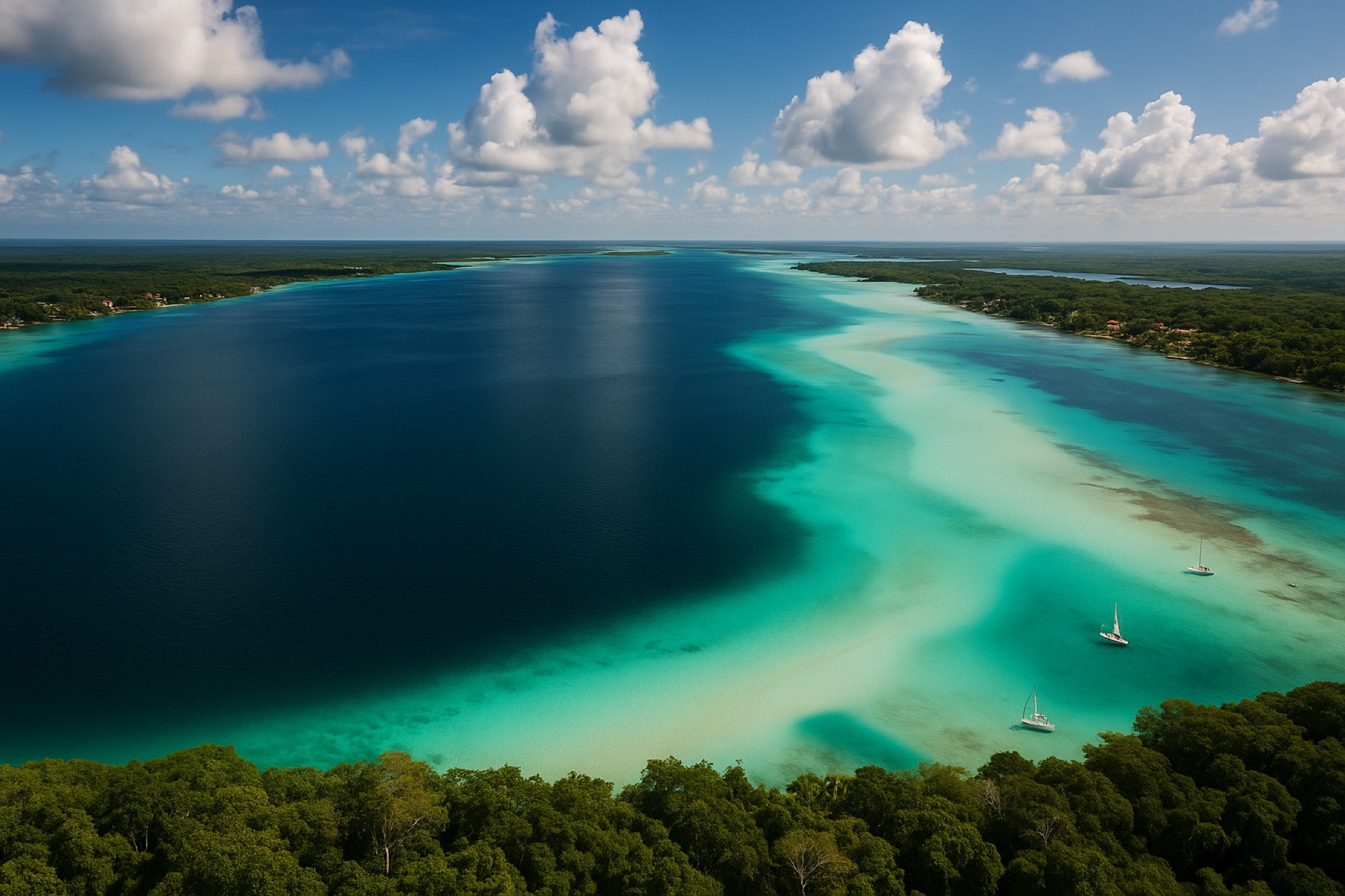
Explore the cenotes of Bacalar: the deep Cenote Azul, the mysterious Cenote Negro, and Cocalitos with its stromatolites. How they form, plus tips for visiting.
What Cenotes Are, and Why Bacalar Has Them
A cenote is a natural freshwater sinkhole that forms when the roof of a limestone cave collapses, exposing the groundwater that runs beneath the Yucatán Peninsula. The region is essentially one vast limestone sponge, riddled with thousands of these water-filled wells and laced together by underground rivers. For centuries they were a source of life and sacred places for the Maya, who regarded them as gateways to the underworld.
What sets Bacalar apart is the constant conversation between its cenotes and the Laguna de los 7 Colores. Several of the deepest cenotes open directly within the lagoon or along its shore, feeding it with fresh water and creating the bands of intense blue the place is known for. Where the white limestone bottom suddenly drops into a cenote, the water shifts from translucent aquamarine to an almost-black blue within a few meters.
This pairing is unusual. Across much of the Riviera Maya, cenotes are inland caverns, whereas in Bacalar many are part of the lagoon itself. That lets you swim from one shade to the next without leaving the water and grasp, almost at a glance, why the lagoon wears so many colors.
Cenote Azul: One of the Deepest in the Region
Cenote Azul is the star among Bacalar's cenotes and one of the deepest in Mexico, reaching roughly 90 meters. It sits just a few minutes south of town, beside the highway, opening like an enormous circular eye of cobalt-blue water ringed by jungle. Its scale and depth are humbling: from the surface, the clear water reveals rock walls plunging straight down until they vanish into darkness.
It is an open-air cenote, perfect for swimming in cool, crystalline water. Because there is no visible bottom at its center, it is wise to bring a life vest or flotation device if you are not a confident swimmer, especially since fresh water offers less buoyancy than the sea. Many visitors prefer to follow the edges, where fish drift past and the vertical drop of the walls is easiest to admire.
There is usually a waterside restaurant on the shore, making it a comfortable spot to spend the morning. Arrive early to enjoy it before the crowds gather, and save a moment simply to peer over the rim and feel the serene vertigo of those 90 meters of blue beneath your feet.
Cenote Negro and Cenote Cocalitos: Contrasts of the South
Cenote Negro, also known as Cenote Esmeralda, is a deep cenote set within the lagoon, its waters dark and mysterious thanks to its great depth. It is usually visited by kayak or boat as part of a lagoon tour, and swimming over it is a different kind of experience: the cool, deep-green water contrasts sharply with the bright tones around it, a reminder that a freshwater abyss opens up just below.
Cocalitos, by contrast, is famous for its stromatolites: rocky formations built by colonies of microorganisms that rank among the oldest life forms on Earth. Bacalar is home to one of the largest colonies in the world, and here you can see them up close in shallow water. They are extremely fragile and take centuries to grow, so the rule is absolute: never touch them or stand on them; observe only from the water or from the boardwalks.
Visiting both in a single day makes Bacalar's dual nature clear: the unfathomable dark depth of Cenote Negro set against the living, luminous antiquity of the Cocalitos stromatolites. They are two faces of the same ecosystem, and both deserve respect and wonder in equal measure.
Tips for Visiting the Cenotes of Bacalar
Protect the water: use only biodegradable sunscreen, free of zinc oxide and harsh chemicals, or cover up with long-sleeved swimwear. Conventional sunscreens harm these fragile ecosystems, and at many sites entering the water with lotion on is prohibited. Avoid any object that could be lost to the depths, and never remove shells, rocks, or fragments of stromatolite.
Go early. The cenotes and the lagoon's most beautiful spots are best enjoyed first thing in the morning, with soft light, fewer people, and stiller water. Bring cash for entry fees and meals, water shoes for the rocky edges, and plenty of drinking water, since the heat and humidity of southern Quintana Roo are felt even while you swim.
Consider a guided kayak or sailing tour to take in several cenotes in one outing and learn about the ecosystem from people who live it every day. And remember that the south of the lagoon, where the water reaches its deepest, most intense tones, is precisely where these wonders cluster: waking up near them, with the jungle and water just steps away, is one of the great luxuries of living in southern Bacalar.
Frequently asked questions
How deep is Cenote Azul in Bacalar?+
Cenote Azul reaches around 90 meters deep, making it one of the deepest cenotes in Mexico. It is an open-air cenote with crystalline water, ideal for swimming, though a life vest or flotation device is recommended for less experienced swimmers, since there is no visible bottom at its center.
What are the best cenotes to visit in Bacalar?+
The most popular are Cenote Azul, for its striking depth and cobalt-blue water; Cenote Negro (or Esmeralda), a deep, dark cenote set within the lagoon; and Cocalitos, famous for its stromatolites, living formations that are among the oldest on the planet. Each offers a different experience of the same ecosystem.
Can you swim among the stromatolites in Bacalar?+
You can swim near the stromatolites, for example at Cocalitos, but you must never touch them or stand on them. They are extremely fragile living organisms that take centuries to grow and rank among the oldest life forms on Earth. Observe them only from the water or the boardwalks, and always use biodegradable sunscreen.
Live Bacalar front-row
Discover The Reserve, a luxury community in the south of the Lagoon of Seven Colors.
Discover the project