Nature
Lagoon of Seven Colors, Bacalar: The Science of the Blues
Why the Lagoon of Seven Colors shifts from aquamarine to deep blue: the science behind Bacalar's water, the seven tones, and where to see them most intense.
Why It's Called the Lagoon of Seven Colors
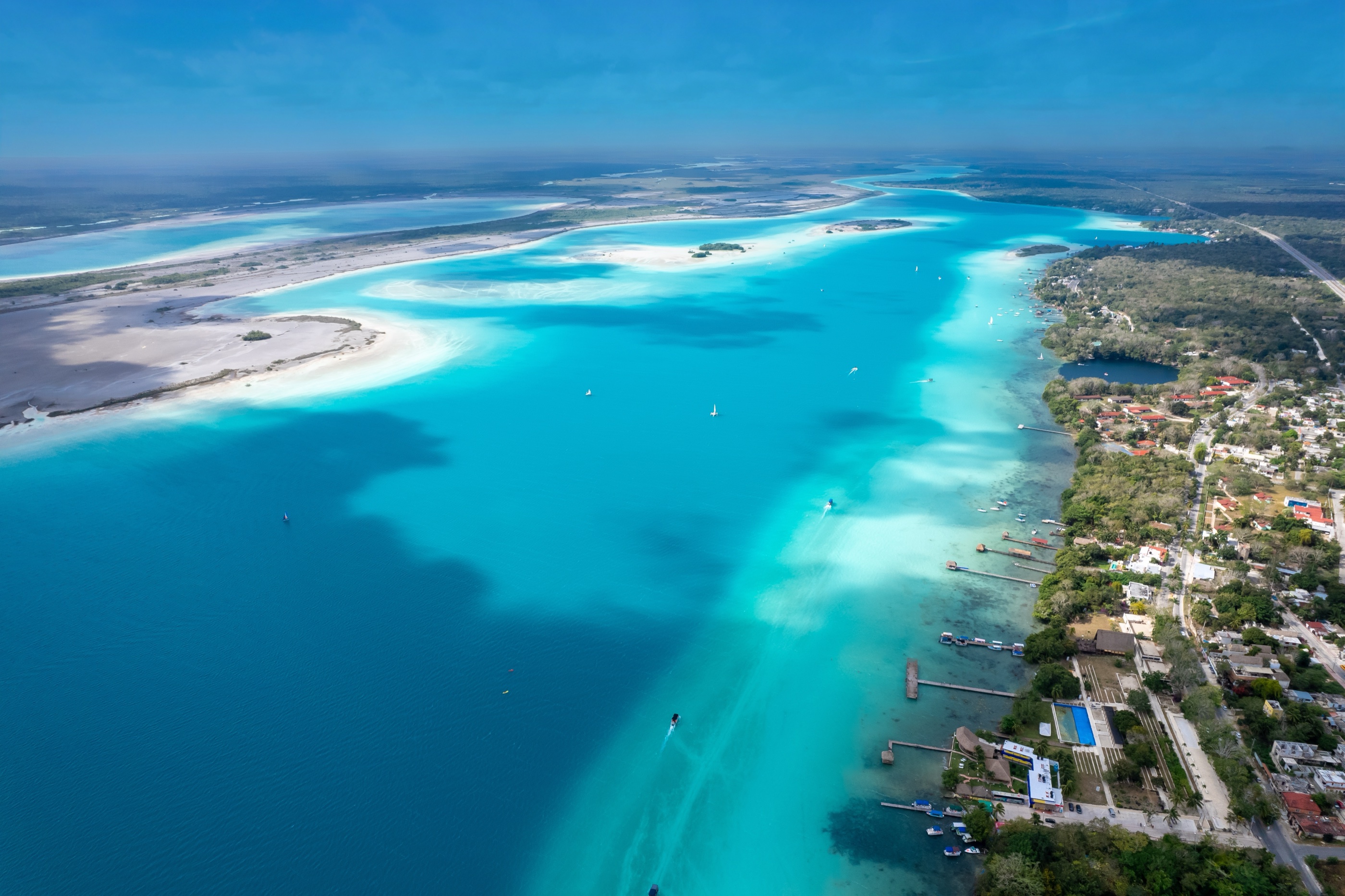
Across its roughly 42 kilometers, the Bacalar lagoon unfolds a range of blues and greens so wide it hardly seems like a single body of water. That is the origin of its popular name: the Lagoon of Seven Colors. There is no official catalog of those seven tones, but anyone who travels its length recognizes them at once — luminous aquamarine in the shallows, turquoise, jade green, sky blue, cerulean, cobalt, and, in the deepest stretches, an almost ink-dark blue that blurs into the horizon.
What is fascinating is that these colors come from no pigment and no algae staining the water. The lagoon is freshwater and, in itself, perfectly clear. The colors are an optical effect: the result of how sunlight passes through the water and bounces off the bottom. That is why they shift with depth, with the time of day, and with the clouds, so the same lagoon shows a different palette in the morning, at midday, and at sunset.
Understanding why this happens takes nothing away from the magic; if anything, it helps you appreciate how fragile and singular this place is — one of the few in the world where freshwater reaches this intensity of color.
The Science of Color: Depth, a White Bottom, and Light
The first ingredient is the bottom. Much of the lagoon bed is covered in pale, almost white limestone sediment, typical of the Yucatán Peninsula's limestone bedrock. That pale floor acts like a reflector: in the shallows, sunlight reaches it, bounces back, and returns to the surface, sending up the brightest aquamarines and turquoises.
The second ingredient is depth. As the water deepens, light has to travel through a taller column before it can touch the bottom. Water absorbs the warm end of the spectrum first — reds and yellows — and lets the blues through, so the deeper the point, the more intense and dark the blue appears. Where the bottom drops away sharply, over submerged cenotes and sinkholes, almost no light returns and the water turns cobalt or nearly black.
The third ingredient is the light itself. A clear sky and the high midday sun produce the most vivid colors, because the light strikes the surface nearly vertically and penetrates more deeply. Under clouds or against the light, the tones dull to a leaden gray. That is why it pays to be on the water between mid-morning and mid-afternoon, when all seven colors reach their full splendor.
The Role of Cenotes and Freshwater
Bacalar is no ordinary lagoon: it is fed by freshwater rising from underground through springs and cenotes. These natural wells are openings in the limestone that connect to the peninsula's vast network of subterranean rivers, and they are responsible for the most dramatic blues. Cenote Azul, for instance, is one of the deepest in the area at around 90 meters, and its color contrasts sharply with the turquoise shallows that surround it.
That mix of depths — white shoals beside dark chasms — is exactly what creates the mosaic of colors. Where the bottom is shallow and bright, the water glows aquamarine; a few meters away, over the mouth of a cenote, the same body of water sinks into deep blue. The contrast between the two is what makes photographs of Bacalar look edited when they are not.
The clean freshwater also explains the transparency. Without the murkiness of the open sea, light travels unobstructed, which is why the colors look crisp and saturated. That same purity is what sustains the lagoon's fragile stromatolites — living reefs of microorganisms that rank among the oldest forms of life on Earth.
Where to See the Most Intense Tones
Beautiful as the whole lagoon is, the deepest, most saturated blues are concentrated in the south. That is where the channel runs deepest and where the cenotes give the water its near-ink quality. Toward the far south, near the village of Xul-Ha, the lagoon narrows and flows into Los Rápidos, a natural channel with a gentle current and beds of stromatolites, where the crystalline water reveals the bottom in astonishing detail.
The north and center of the lagoon, facing the town of Bacalar, offer the brightest turquoises and famous shallows like the so-called pirates' channel. But anyone chasing the most serious blue — the one that turns nearly violet under the sun — should look to the south, where the lagoon reaches its greatest depth and its deepest quiet.
Traveling the lagoon from north to south is, in a way, watching the seven colors parade past in order: from shallow aquamarines to abyssal blues. You don't have to go far to notice the change; simply let the water carry you and watch how it transforms beneath the hull of a boat or a kayak.
Why It Must Be Protected
All this beauty is more delicate than it looks. The colors depend on a fine balance of clean water, a bright bottom, and microbial life, and that balance breaks easily. Conventional sunscreens and tanning lotions release chemicals that harm the stromatolites and cloud the water, which is why the golden rule is to enter without sunscreen — or to use only genuinely biodegradable formulas — and better still, to cover up with clothing and shade.
The bottom asks for respect, too. Anchoring boats directly on the bed or stepping on the stromatolites destroys them: these are structures that took thousands of years to form and do not regenerate on a human timescale. So it is wise to travel with responsible operators, avoid touching or standing on the bottom, and never stir up the sediment, which when lifted literally dims the colors.
Bacalar has been a Pueblo Mágico since 2006, and its greatest treasure is precisely that seven-colored water. Caring for it is what allows it to keep existing. To live or spend time in the south of the lagoon, where the water reaches its deepest tone, is also to take on the commitment to protect it: to slow down, respect the jungle, and let the water keep telling, in silence, the story of its colors.
Frequently asked questions
Why does the Bacalar lagoon have seven colors?+
The colors are an optical effect, not pigments. They depend on the water's depth, on a pale limestone-sediment bottom that reflects light, and on how the sun strikes the surface. In the shallows, light bounces off the white floor to produce aquamarines and turquoises; in deeper areas the water absorbs the warm tones and appears an intense, almost ink-like blue.
Where are the most intense colors in the Lagoon of Seven Colors?+
The deepest, most saturated blues are in the south of the lagoon, where the water is deepest and cenotes intensify the color. Near Xul-Ha, at Los Rápidos, the water is also remarkably crystalline. The north and center, facing the town of Bacalar, offer the brightest turquoises.
Can I wear sunscreen in the Bacalar lagoon?+
Ideally, avoid conventional sunscreen, as its chemicals harm the stromatolites and cloud the water. If you need protection, choose genuinely biodegradable formulas and, above all, cover up with clothing, a hat, and shade. You should also never anchor on the bottom or step on the stromatolites.
Live Bacalar front-row
Discover The Reserve, a luxury community in the south of the Lagoon of Seven Colors.
Discover the project