Investment
Land Appreciation in Bacalar: Why Values Are Rising South of the Lagoon
Land appreciation in Bacalar: the real drivers behind rising land values—Tren Maya, Ichkabal, scarcity, regulation—and what to verify before you invest.
Appreciation doesn't fall from the sky: it's built all around
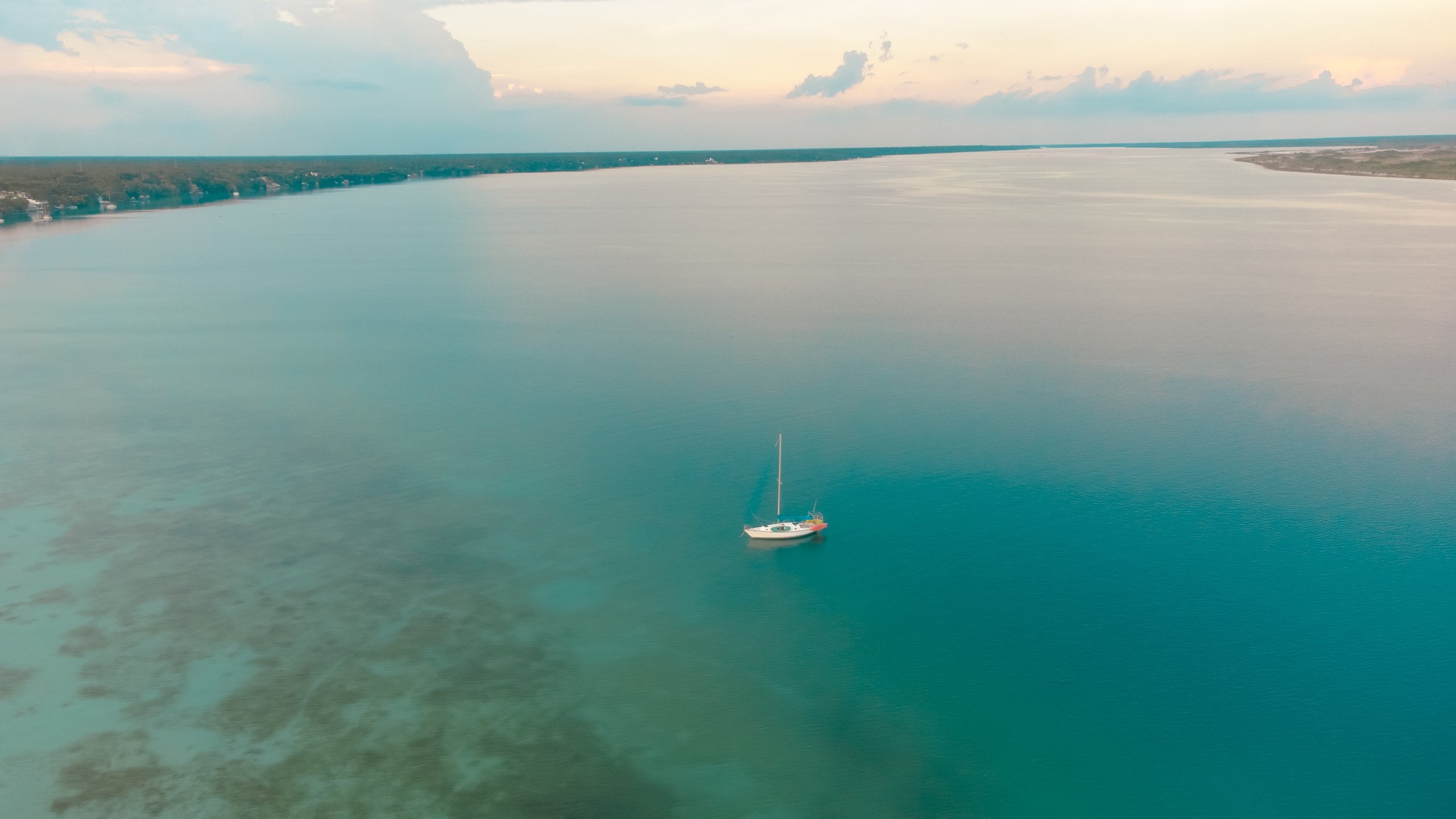
When people talk about property appreciation, they tend to picture a chart that climbs on its own, as if land gained value by decree. The reality is less magical and more interesting: land appreciates when the world around it improves in tangible ways. Infrastructure arrives where there was none, a new attraction brings in first-time visitors, available supply sells out faster than it can be replaced, and regulation keeps growth from destroying the very thing that sparked the interest in the first place. Bacalar—with its freshwater lagoon stretching some 42 kilometers, its millennia-old stromatolites, and its status as a Pueblo Mágico—now brings those ingredients together in a way few destinations in Mexico can claim all at once.
This article offers no percentages and no promised returns, because any figure of that kind would be speculation dressed up as analysis. What it does offer is something more useful to anyone weighing an investment in Bacalar: an honest review of the forces pushing land values upward, of the natural and legal limits holding supply in check, and of the risks worth looking at squarely before committing capital. Understanding the mechanics—why prices rise, and what could slow them down—is the difference between buying a pretty story and making an informed decision.
Tren Maya and the Tulum airport: connectivity is no longer a promise
For years, the strongest argument against Bacalar was distance: an extraordinary destination that was simply hard to reach. That argument is being dismantled piece by piece. The Tren Maya is now running, with its own station in Bacalar—integrating the destination into a rail network that spans southeastern Mexico and connects it to Cancún, Tulum, Mérida, and the rest of the peninsula without depending on a car. For land values, a train station is no picturesque detail: it is permanent infrastructure, the kind that reshapes the flow of visitors and residents for decades. Destinations that receive this sort of investment rarely go back to being what they were before it arrived.
Air connectivity adds to the rail link. Tulum's international airport is already in operation, bringing the southern Caribbean within reach of domestic and international travelers who previously had only Cancún—some four and a half to five hours away by road. And Chetumal, the state capital with an airport of its own, sits just 30 to 40 minutes from the southern end of the lagoon. That range of access matters because real estate demand follows accessibility: when getting there stops being an expedition, repeat visits multiply, second homes become viable, and the long-season resident appears. It is the same pattern that, in its day, transformed other destinations in the region.
Ichkabal: a cultural anchor just beginning to pull its weight
The opening of the Ichkabal archaeological zone gave southern Quintana Roo something money cannot build: a monumental Maya site, closed to visitors for decades, within easy reach of Bacalar. The history of tourism on the peninsula shows that major archaeological sites act as destination anchors: they organize travel routes, justify longer stays, and attract the kind of traveler who seeks culture and nature, not just beach. Chichén Itzá did it for Valladolid and the inland route; the Tulum ruins did it for the coastal corridor that bears their name. Ichkabal is poised to play a similar role for Bacalar, and its effect is only beginning to unfold.
For land, this means a source of demand that is distinct from—and complementary to—the lagoon. A destination offering freshwater in seven shades, millennia-old stromatolites, and a Maya city newly opened to the public stops competing as just another dot on the Caribbean map and starts building an identity of its own, one that is hard to replicate. That differentiation is the raw material of long-term appreciation: interchangeable places compete on price; singular places compete on desire. Bacalar is crossing that threshold, and whoever buys land today is buying, in large part, a position within that identity as it takes shape.
Scarcity and regulation: supply cannot grow without limit
The second pillar of the thesis is quieter, but probably more powerful: in Bacalar, well-located land is genuinely scarce. The lagoon has a finite shoreline, surrounded by jungle, wetlands, and bodies of water where development is off the table, and the strip with real access to the water—or honest proximity to it—cannot be manufactured. Unlike a market where it is always possible to build more towers or open new land reserves, here the core asset is a landscape that cannot be reproduced. When demand grows against a supply that cannot expand at the same pace, the result is the oldest mechanism in real estate appreciation—no invented numbers required.
Layered onto that natural scarcity is a regulatory one. Bacalar's Urban Development Program caps densities and restricts what can be built, precisely to keep the destination from repeating the excesses seen elsewhere on the Mexican Caribbean. For a developer in a hurry, that is an obstacle; for an owner with a long horizon, it is protection. Regulation that prevents saturation safeguards the resource that underpins all the value—the water, the silence, the jungle—and guarantees that future supply will remain contained. In appreciation terms, few things protect an investment like the certainty that the neighborhood can never be overbuilt.
The lesson of Tulum and the Riviera, with the risks on the table
The comparison with Tulum and the Riviera Maya is inevitable, and it deserves to be made honestly. Those who bought land in those destinations while they were still towns with narrow roads watched the arrival of infrastructure, hotels, and international demand transform the value of their properties within a single generation. But that same story left uncomfortable lessons: disorderly growth, pressure on ecosystems, and areas that lost the very character that made them desirable. Bacalar arrives at its own inflection point with those lessons in plain view, and with a regulatory framework explicitly designed not to repeat them. The opportunity looks similar; the conditions for protecting it are better.
That said, no serious investment is judged by its bright side alone. Appreciation in Bacalar is a medium-term thesis: infrastructure takes time to translate into consolidated value, and anyone chasing immediate gains is looking at the wrong destination. The other real risk is legal. Private property, ejido land, and federal environmental regulation coexist in this region, and the difference between a great investment and an expensive problem usually comes down to the paperwork: clean title, compatible land use, permits in order, and a developer who can prove all of it before a notary. The good news is that this filter can be passed; the condition is never to skip it.
The southern lagoon: where the thesis comes together
If the engines of appreciation are connectivity, singular attractions, and scarcity, the southern lagoon is where all three converge with the greatest force. It is the zone with the deepest, most intensely colored waters, the closest to Xul-Há—at the southern tip of the lagoon—and the one that best preserves the jungle setting that defines the Bacalar experience. Nor is it an isolated corner: the town, with its fort, its waterfront promenade, and its Pueblo Mágico life, is about 15 minutes away, and Chetumal, with its airport and the services of a state capital, 30 to 40. It is the combination the market rewards over time: an intact setting with access already solved.
At that exact point on the map, The Reserve Bacalar is taking shape: a private residential community on the southern lagoon that embodies, in miniature, the full thesis of this article. Low density instead of volume, with lots from 200 square meters within a master plan that integrates an international-caliber hotel immersed in rivers created within the development, a Day Club with direct access to the lagoon, and Branded Residences for those who want ownership with hotel services. For anyone who has followed the reasoning this far—real infrastructure, genuine scarcity, regulation that protects value—the southern lagoon is not a hunch: it is the logical conclusion. The next step is to see it in person.
Frequently asked questions
What is driving land appreciation in Bacalar?+
Three main factors: new, permanent infrastructure (the Tren Maya with its own station in Bacalar and Tulum's international airport, already in operation), singular attractions that set the destination apart (the freshwater lagoon, the stromatolites, and the opening of Ichkabal), and a genuinely limited supply of land, constrained both by geography and by regulation that caps allowable density.
Is now a good time to invest in Bacalar?+
Bacalar is at an inflection point: connectivity is up and running, demand is growing, and land near the lagoon remains scarce. But this is a medium-term thesis, not a quick flip. It is a good time for investors with a long horizon who verify the legal certainty of the property and choose a transparent developer with permits and a master plan in order.
How does the Tren Maya affect land values in Bacalar?+
The Tren Maya runs with its own station in Bacalar, integrating the destination into a network that connects southeastern Mexico. Permanent infrastructure of this kind reshapes the flow of visitors and residents for decades: it encourages repeat visits, extends stays, and makes second homes viable—precisely the sources of demand that sustain land appreciation.
What are the risks of investing in Bacalar?+
The two main ones are the time horizon and the paperwork. Appreciation in Bacalar builds over the medium term, so this is not a market for quick speculation. And because private property, ejido land, and federal environmental regulation coexist in the region, it is essential to verify title, land use, and permits with a notary and local legal counsel before buying.
Why does the southern lagoon hold the greatest potential?+
The south combines the lagoon's deepest, most intensely colored waters, the best-preserved jungle setting, and proximity to Xul-Há, at the southern tip of the lagoon. Access is also solved: the town of Bacalar is about 15 minutes away, and Chetumal—with an airport and the services of a state capital—30 to 40. An intact setting with real connectivity is the combination the market rewards over time.
Live Bacalar front-row
Discover The Reserve, a luxury community in the south of the Lagoon of Seven Colors.
Discover the project