Investment
Vacation Rentals in Bacalar: What to Know Before You Buy to Rent
An honest guide to vacation rental investing in Bacalar: real demand, seasonality, guest profiles, and what makes a lagoon property truly profitable.
The demand behind the destination: why people search for an Airbnb in Bacalar
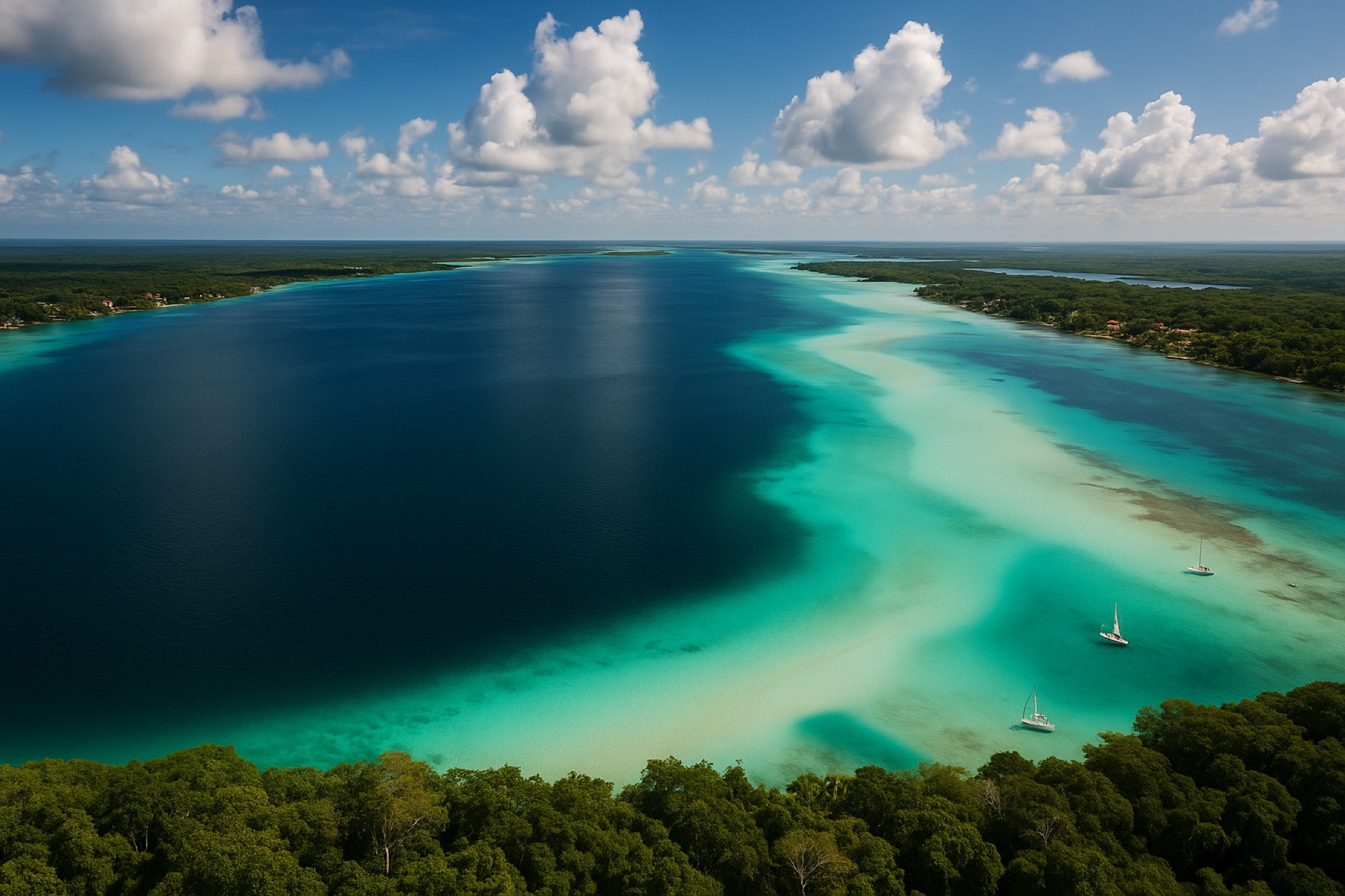
Before talking about properties, it's worth understanding what draws travelers here in the first place, because a vacation rental is only as solid as the demand behind it. Bacalar is a Pueblo Mágico with an asset no other destination in Mexico can replicate: a freshwater lagoon roughly 42 kilometers long, internationally famous for its gradient of blues and home to millennia-old stromatolites, living structures that rank among the oldest life forms on the planet. Nobody ends up in Bacalar by accident or because it sits next to a mega-airport: travelers come deliberately, looking for exactly this. That intentionality is some of the best news possible for anyone weighing a buy-to-rent purchase, because it translates into guests who appreciate the setting, stay more nights, and come back.
On top of that organic demand, the past few years have brought access infrastructure that simply didn't exist before. The Tren Maya is now running with a station in Bacalar, Tulum's international airport is operational, and the archaeological zone of Ichkabal — one of the most monumental Maya cities in the region — has opened to the public, adding a first-rate cultural anchor to southern Quintana Roo. Chetumal, the state capital, is 30 to 40 minutes away with its own airport, and Cancún sits about four and a half to five hours by road for anyone arriving through the country's best-connected hub. For a vacation rental investor, each of these routes is a distinct channel bringing in guests with different profiles and budgets.
Honest seasonality: when Bacalar fills up — and when it doesn't
Any serious analysis of vacation rentals in Bacalar has to start by accepting that the destination is seasonal, as virtually all of the Mexican Caribbean is. High season runs from winter into spring: the months when North America and Europe flee the cold coincide with the lagoon's kindest weather — sunny days, little rain, and the water at its most photogenic. Add to that the peaks of Mexican domestic travel — Holy Week, the school summer break, long weekends, and the year-end holidays — when national tourism fills the town and the lagoon's shores. Anyone buying to rent should build their numbers on this real calendar, not on the fantasy of even occupancy twelve months a year.
The flip side is the rainy season, which in this region covers much of summer and fall. There are fewer visitors, some genuinely quiet weeks, and it's the natural window for maintenance, upgrades, and letting the property rest. None of this is a hidden flaw: it's the rhythm of the destination, and the operators who thrive are the ones who plan around it instead of suffering through it. Adjusting rates by season, opening up long stays in slow months, and tending to your online reputation year-round is what separates a property that lives off three good months from one that works all twelve intelligently. Be wary of any projection promising guaranteed occupancy rates: in vacation rentals, serious numbers are built, not promised.
Who the guest is: couples, nature travelers, and remote workers
Bacalar's guest has a fairly well-defined profile, and knowing it determines what kind of property is worth buying. The most visible segment is couples — Mexican and international — seeking a getaway of natural beauty without the massive scale of Cancún or the Riviera Maya: sunrises over the lagoon, kayaking on calm water, unhurried dinners. Next come nature and wellness travelers, drawn by the stromatolites, the cenotes, birdwatching, and a local culture that still feels authentic. This traveler values silence, design that blends into its surroundings, and sustainable practices — and punishes noise, invasive construction, and sloppy operations in their reviews. This is not the party guest: it's the guest who pays for peace and quiet.
The third profile, more relevant every year, is the remote worker who can spend weeks or months anywhere they choose — and decides to do it facing a lagoon. For this guest, flawless internet is worth more than a pool, and a comfortable workstation with a view can justify a long stay in the middle of low season, precisely when it's most welcome. Long stays smooth out seasonality, reduce turnover and wear on the property, and tend to produce the destination's best ambassadors. A property designed from day one for these three profiles, rather than for a generic tourist, competes in a different category on vacation rental platforms.
What sets apart a property that actually rents
In Bacalar, the variable that rules them all is the relationship with the lagoon. Properties with water frontage or genuine access to it — a dock, a beach club, a spot to swim or paddle from — play in a different league from those that merely promise proximity. The guest who chose Bacalar came for the lagoon, and their willingness to pay moves in direct proportion to how present it is in their daily experience. The southern end of the lagoon, toward Xul-Há — at the far south of the water body, about fifteen minutes from town — also offers something increasingly scarce: calm waters and low-density surroundings, away from the bustle of the center yet within practical reach of restaurants and services.
The second variable is design — not as an aesthetic indulgence but as a commercial tool. On vacation rental platforms, photography is the product: spaces with character, fine natural materials, integration with the vegetation, and that sense of place you can't fake are what stop the scroll and turn a search into a booking. The third is professional operations. Impeccable cleaning, fast responses, preventive maintenance, frictionless check-in: none of it is glamorous, but it's what sustains the high ratings a property lives on over the years. An extraordinary home run poorly ends up earning less than a good one run with excellence — and that may be the most expensive lesson first-time investors learn.
Community rules and sustainability: renting without degrading the destination
Investing to rent in Bacalar carries a responsibility that is optional in other destinations and existential here: the lagoon is an extraordinarily sensitive freshwater ecosystem, and the stromatolites that make it unique took millennia to form. That translates into concrete practices for any rental property: proper wastewater treatment, a ban on sunscreens and soaps that harm the water, clear rules for docks and watercraft, and guests who are briefed on how to behave in the ecosystem. Far from being a burden, communicating these rules clearly has become a selling point: the traveler Bacalar attracts actively seeks out lodging that takes sustainability seriously, and rewards it with bookings and reviews.
Getting along with the community matters just as much. Destinations where vacation rentals grew without rules end up generating friction with neighbors, overloaded services and, sooner or later, reactive regulation. Gated residential communities with internal bylaws solve much of this equation at the source: they define from the design stage what can be built, how water and waste are managed, what density the area will have, and under what rules owners, guests, and environment coexist. For the investor, that order isn't bureaucracy: it's long-term protection for the asset. A property surrounded by anarchic growth loses exactly what the guest pays for; one inside a planned framework preserves it.
The value of operating from a residential community with a hotel and amenities
There's a world of difference between buying an isolated lot and building an operation from scratch, and buying within a development conceived for hospitality. In the first case, the owner shoulders everything alone: security, access road maintenance, utilities, cleaning, guest service, and building a reputation from anonymity. In the second, the community's infrastructure works in the property's favor: round-the-clock security, well-kept common areas, construction standards that protect the landscape and — when the development includes a hotel component — a culture of service that elevates the experience of every guest who walks through the door. Shared amenities also solve what an individual house can rarely offer: proper access to the lagoon, wellness spaces, restaurants within walking distance.
That is precisely the premise of The Reserve Bacalar, a gated residential community on the southern end of the lagoon, in the calm-water zone near Xul-Há, about fifteen minutes from town. The project integrates a world-class hotel immersed in rivers created within the development, a Day Club with direct access to the lagoon, Branded Residences operated to hospitality standards, and lots from 200 m² for those who prefer to build their own vision. For anyone weighing a rental investment in Bacalar, the takeaway is simple: the same setting that wins guests over — lagoon, jungle, silence — paired with the infrastructure that makes professional operation viable. For those who want to explore the southern lagoon at their own pace, that tends to be the best place to start.
Frequently asked questions
Is buying a property to rent on Airbnb in Bacalar a good idea?+
It can be, if you go in with realistic expectations: Bacalar has growing demand thanks to its Pueblo Mágico status, the lagoon, and new access routes like the Tren Maya and the Tulum airport, but it is a seasonal destination. The properties that perform combine genuine lagoon access, good design, and professional operations. Be wary of anyone promising guaranteed occupancy or returns.
What is the best season for vacation rentals in Bacalar?+
High season runs from winter into spring, when the weather is driest and international travelers arrive, complemented by Mexican holiday peaks: Holy Week, the school summer break, long weekends, and the year-end holidays. The rainy season, in summer and fall, is quieter and is typically used for maintenance and for attracting long stays from remote workers.
What kind of guest visits Bacalar?+
Mostly couples in search of rest, nature travelers drawn by the lagoon, the stromatolites, and the cenotes, and remote workers who settle in for weeks or months. It's a guest who pays for tranquility, a well-kept setting, and good design — and who punishes noise and sloppy operations. It is not the mass-tourism or party profile of other Mexican Caribbean destinations.
What makes a vacation property in Bacalar more profitable?+
Three factors rule: the relationship with the lagoon (water frontage or genuine access via a dock or club), design with character that stands out in platform photography, and consistent professional operations — cleaning, maintenance, fast guest responses. Being inside a residential community with security, amenities, and construction standards also protects the asset's long-term value.
How do you get to Bacalar, and does that affect rentals?+
There are now several routes: the Tren Maya with a station in Bacalar, the Chetumal airport 30-40 minutes away, Tulum's international airport already in operation, and Cancún about 4.5-5 hours by road. Each channel brings a different guest profile, and that diversification of access strengthens vacation rental demand compared with destinations that depend on a single gateway.
Live Bacalar front-row
Discover The Reserve, a luxury community in the south of the Lagoon of Seven Colors.
Discover the project