Destination
Tren Maya in Bacalar: The Station Connecting the South
Bacalar's Tren Maya station is up and running on the southern line: what it connects to, how to pair it with Tulum and Chetumal airports, and arrival tips.
The Tren Maya Arrives in Bacalar: A Station on the Southern Stretch
For decades, getting to Bacalar was an exercise in patience. Connectivity on the Yucatán Peninsula was concentrated in the north —Cancún, the Riviera Maya— and southern Quintana Roo sat at the end of a long highway, beautiful but lonely. Anyone who wanted to see the Lagoon of Seven Colors had to earn it: four and a half to five hours from the Cancún airport, with the lagoon as the prize at the end of the drive. That remoteness shielded Bacalar from mass tourism and shaped its quiet character, but it also kept it off the map for many travelers. The Tren Maya has redrawn that geography without erasing what distance had preserved: today Bacalar has a station of its own and belongs to a rail network that spans Mexico's southeast.
The Tren Maya is a rail project on a peninsular scale: a great loop linking five southeastern states —Quintana Roo, Yucatán, Campeche, Tabasco, and Chiapas— and stitching beach destinations, colonial cities, jungle, and archaeological sites into a single system. Bacalar's station sits on the network's southern stretch, the one that descends from Tulum through inland Quintana Roo down to Chetumal, the state capital. It is a different world from the northern segment: here the train doesn't run past hotels and theme parks but through low jungle, small communities, and a landscape that still looks much as it did fifty years ago.
The station lies on the outskirts of the town of Bacalar, a few minutes by car from the center, and from there the southern lagoon is just as close: the town sits about fifteen minutes from the southern shore, where the water reaches its deepest blues. Beyond the infrastructure itself, what the station really means is a change in status. Bacalar stops being a remote dot reachable only by road and becomes a named stop on a network that connects much of the Maya world. For a Pueblo Mágico that always lived off its relative isolation, it is a transformation worth taking the time to understand.
Where the Bacalar Station Connects
Heading north, the line links Bacalar to Mexico's most important tourism corridor. The route climbs toward Tulum —where it connects with the new international airport— and continues on to Playa del Carmen and Cancún, following the network's general path up the eastern side of the peninsula. That means a traveler can land in Cancún or Tulum and reach Bacalar without driving, something unthinkable just a few years ago. It works in reverse, too: anyone who lives in Bacalar or spends long stretches there now has an alternative to the car for heading up to the Riviera Maya, whether for work, an international flight, or simply the pleasure of crossing the peninsula a different way.
Heading south, the first stop that matters is Chetumal, Quintana Roo's capital, thirty to forty minutes from Bacalar by car. Chetumal brings everything a capital offers —hospitals, universities, government offices, an airport— and the train pulls it even closer to daily life on the lagoon. But the network doesn't end there: from the south of the state, the system continues toward the western side of the peninsula, and through its connections you can carry on to Escárcega and from there toward Palenque, in Chiapas, one of the most extraordinary archaeological zones in the country. The full circuit also takes in Campeche and Mérida, so that Bacalar is joined, for the first time in its history, to the great ring of the Maya world.
The deeper effect is that Bacalar stops being a terminal destination —the end of the road— and becomes a node: a midpoint between the Riviera Maya and Chetumal, between the Mexican Caribbean and the routes toward Calakmul and Palenque. For travelers, that opens itineraries that used to be impractical: pairing lagoon and archaeology, beach and jungle, in a single trip without depending on a car. For those who have made the southern lagoon their place in the world, it means something simpler and more valuable: options. Different ways to arrive, different ways to leave, and the peace of mind of knowing that distance is no longer a barrier but a choice.
What It Means for Tourism and Southern Quintana Roo
The first visible effect is a redistribution of tourism. For decades, the overwhelming majority of Quintana Roo's visitors clustered in the north, while the south of the state —home to Mexico's most spectacular freshwater lagoon— received barely a fraction. The train brings Bacalar a kind of traveler who rarely ventured this far south before: the one who travels without a car, the one who builds multi-stop routes, the European raised on rail, the one looking for exactly what the north no longer offers. And Bacalar has plenty to show them: a lagoon some 42 kilometers long, ancient stromatolites that rank among the oldest life forms on the planet, and the unhurried rhythm that earned it the title of Pueblo Mágico.
Add to that a new factor: Ichkabal. The public opening of this archaeological zone, a monumental Maya city near Bacalar that remained closed to visitors for decades, gives the south of the state a first-rate cultural anchor. The combination is hard to match anywhere in Mexico: a lagoon unlike any other in the world, a great Maya city newly opened, and a train station tying both to the rest of the peninsula. Southern Quintana Roo goes from being a footnote in the guidebooks to making a complete case: nature, archaeology, and connectivity in a single territory.
It should be said plainly: more connectivity also means more responsibility. Bacalar's lagoon is a fragile ecosystem —its colors depend on clean water, and its stromatolites do not regenerate on a human timescale— and the growth the train brings will need to be orderly so it doesn't destroy the very thing driving it. That is why low-density zones and projects committed to preserving jungle and regulating access to the water matter so much, especially on the southern lagoon, where the depth and the silence run greater. The lesson from other destinations on the peninsula is clear: infrastructure arrives only once, and what gets built alongside it defines a destination for generations.
Train Plus Planes: How It Pairs with Tulum and Chetumal
Until recently, the near-obligatory gateway was the Cancún airport, with its four-and-a-half to five-hour drive to Bacalar. It remains the option with the most international flights, and the federal highway is safe and well served, but the distance takes its toll, especially with children or after a long flight. What's new is that Cancún no longer stands alone: today there are two alternatives that completely change the logistics of reaching southern Quintana Roo, and the train is the thread that ties them together.
The first is the Tulum international airport, already in operation, receiving domestic and international flights and dramatically shortening access to the southern half of the state. Its strategic advantage is its proximity to the rail network: Tulum is precisely where the train's southern stretch begins, so the plane-plus-train combination lets you land and continue to the Bacalar station without ever taking the wheel. For international travelers who want to see the lagoon, it is probably the most comfortable route that has ever existed.
The second is the Chetumal airport, the closest of all: the capital sits thirty to forty minutes from Bacalar along a well-kept highway. Its connections are mostly domestic —Mexico City above all— which makes it ideal for anyone traveling from within the country. What matters is the sum of the three gateways: Cancún for broad international reach, Tulum for the train connection, Chetumal for sheer proximity. Bacalar, which depended on a single route for decades, now enjoys a range of access points that few destinations its size can claim.
Practical Tips for Reaching Bacalar by Train
The first recommendation is also the most important: always check schedules, frequencies, and routes on the Tren Maya's official website before planning your trip. The system is young and still settling in; services expand in phases, and frequencies on the southern stretch differ from those on the Cancún–Tulum corridor, so any specific detail you read on blogs or social media may have changed. Buy your tickets in advance —especially in high season and on long weekends— review the luggage policy, and confirm your departure station, because in some cities the train station isn't downtown.
When you arrive at the Bacalar station, remember that it sits on the outskirts of town: plan on a short taxi or local-transport ride to the center or to your lodging. If you're headed to the southern lagoon, the trip is still brief —the town is about fifteen minutes from that shore— and it's worth arranging transport with your hotel or host before boarding the train, especially if you arrive at dusk. Travel light if you can, carry cash for local rides, and don't schedule tight connections the same day: Bacalar's charm begins, precisely, the moment you stop being in a hurry.
One last itinerary tip: don't treat the train as mere transportation; make it part of the trip. The southern stretch lets you pair Bacalar with Chetumal and its museum of Maya culture, with Ichkabal newly open to the public, or with a longer route toward Campeche and Palenque if you have the days to spare. And once in Bacalar, give the lagoon the time it deserves: one day to sail it, another for its cenotes and rapids, and at least one morning with no plan at all in front of the water. The train brings you closer; the place, in turn, asks you to slow down.
The Southern Lagoon, Better Connected Than Ever
Look closely at the map and the conclusion is hard to avoid: the great beneficiary of this new connectivity is the south. It is the southern lagoon that lies minutes from the town and the station, barely half an hour from Chetumal and its airport, and along the train's natural route to the capital. It is also the south where the lagoon reaches its deepest blues, where the water flows out at Xul-Há, and where the jungle still commands the landscape. For years, that shore was the quietest and the least accessible; today it keeps the quiet, but no longer the inaccessibility. It is a combination that rarely lasts long in any one place.
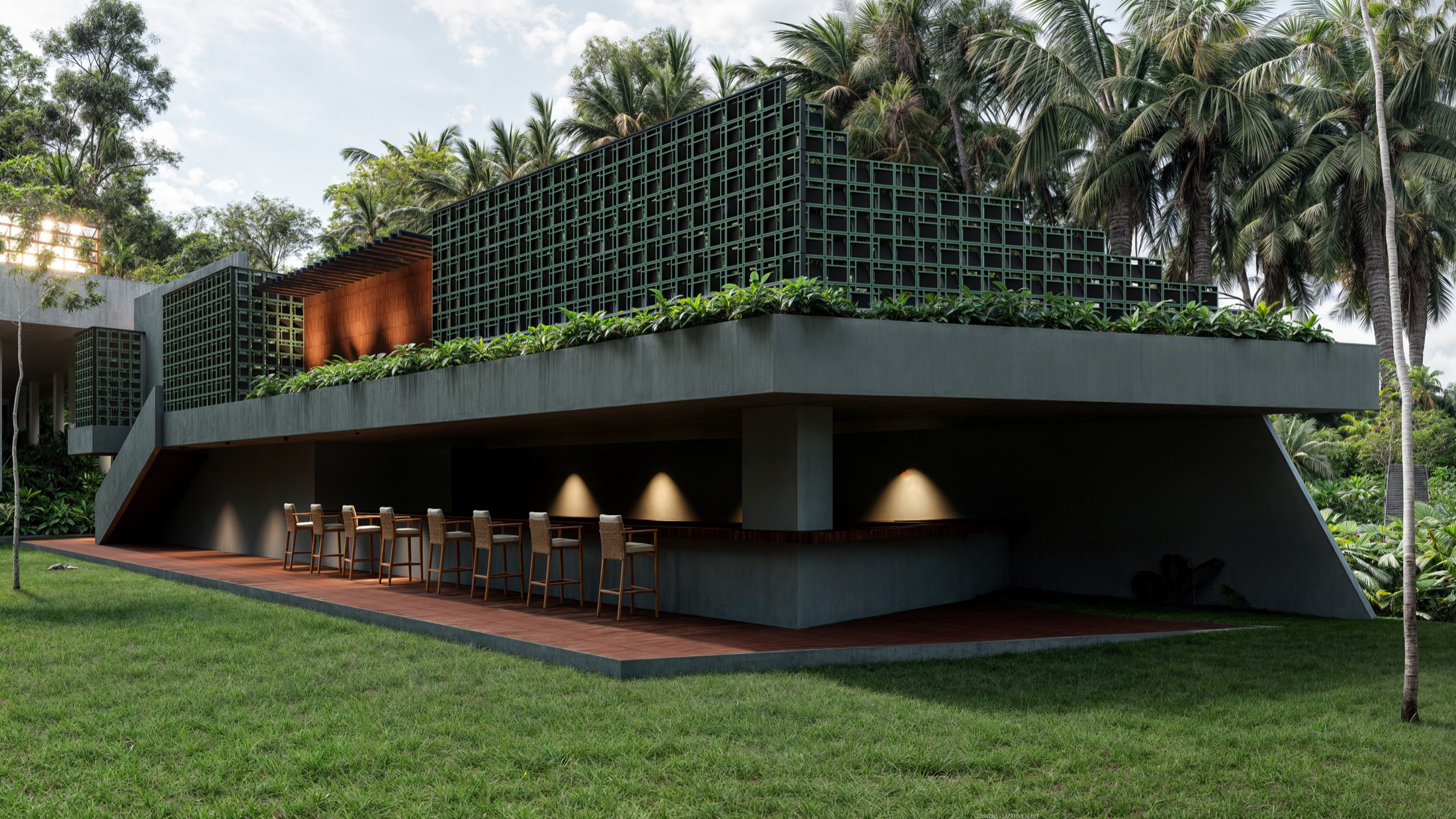
On that southern shore stands The Reserve Bacalar, a private residential community conceived under precisely that logic: embracing the new connectivity without giving up low density or the jungle. The development brings together an international-caliber hotel immersed in rivers created within the project itself, a Day Club with direct access to the lagoon, Branded Residences, and residential lots from 200 m², designed for those who want to build their home facing the deepest chapter of the Lagoon of Seven Colors. The Tren Maya, the Tulum and Chetumal airports, and Ichkabal are drawing the new map of southern Quintana Roo; living it from the lagoon's southern shore may be the most serene way to inhabit it.
Frequently asked questions
Where is the Tren Maya station in Bacalar?+
The Bacalar station sits on the outskirts of town, on the southern stretch of the network running between Tulum and Chetumal. From there, downtown Bacalar is a few minutes away by taxi or local transport, and the southern lagoon about fifteen minutes more. Before traveling, confirm the exact location and access points on the Tren Maya's official website.
Does the Tren Maya connect Bacalar with Cancún and Tulum?+
Yes. The Bacalar station is part of the southern stretch, which links to Tulum, and from there the network continues toward Playa del Carmen and Cancún along the peninsula's eastern corridor. Travel times depend on stops and current frequencies, which have been adjusted in phases, so it's best to check schedules and buy tickets on the official website.
What is the closest airport to Bacalar?+
The closest is Chetumal's, thirty to forty minutes away by road, with mostly domestic flights. The Tulum international airport, already in operation, is the best option for combining plane and train, since the southern stretch begins there. Cancún offers the widest international selection but means a four-and-a-half to five-hour drive to Bacalar.
Can I visit Ichkabal if I arrive in Bacalar by train?+
Yes. The Ichkabal archaeological zone, a monumental Maya city recently opened to the public, lies near Bacalar and can be visited on a day trip from town. After arriving by train at the Bacalar station, you can arrange a transfer or a local tour. It is one of southern Quintana Roo's great new attractions, alongside the lagoon and its stromatolites.
Is it better to reach Bacalar by train or by car?+
It depends on your starting point and your plans. The train is ideal if you fly into Tulum, travel without a car, or are building a multi-stop route across the peninsula. A car remains practical for exploring cenotes and corners of the lagoon at your own pace. Many travelers combine both: arrive by train, then rent a vehicle or use local taxis once in Bacalar.
Live Bacalar front-row
Discover The Reserve, a luxury community in the south of the Lagoon of Seven Colors.
Discover the project